Every year on 11 February, the International Day of Women and Girls in Science invites the global research community to reflect on the role of women in science, not only in terms of representation, but in relation to how research is designed, conducted and sustained over time.
In the European research ecosystem, gender equality is increasingly recognised as a condition for scientific excellence. Inclusive research environments support collaboration, methodological diversity and long-term innovation, all of which are essential when addressing complex biomedical challenges such as muscular disorders.
Within this context, European collaborative projects like DREAMS (Drug Repurposing with Artificial Intelligence for Muscular Disorders) illustrate how gender equality, scientific rigour and interdisciplinary research are closely interconnected.
Women in science and the realities of research careers
Across the European Union, women account for nearly half of doctoral graduates. However, this balance diminishes progressively along the research career path. Women remain underrepresented in senior scientific positions and leadership roles, particularly in highly specialised fields that combine experimental biology, computational approaches and advanced data analysis.
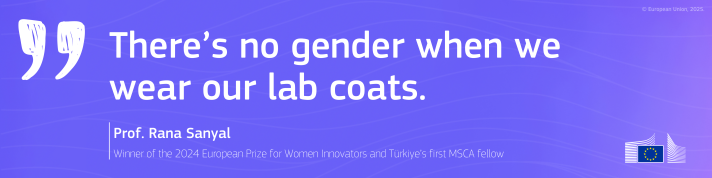 © European Union, 2025.
Biomedical research involving artificial intelligence, disease modelling and translational science often requires long training periods, high mobility and sustained funding stability. These structural conditions can disproportionately affect women researchers, especially at postdoctoral and early-career stages.
Addressing these challenges requires more than symbolic recognition. It calls for research structures that actively support diverse scientific careers, foster collaboration and enable early-career researchers to contribute meaningfully to complex research agendas.
Gender equality as a structural priority in European research
Under Horizon Europe, gender equality is embedded as a core principle of research and innovation policy. Research-performing organisations are required to implement Gender Equality Plans (GEPs) as a condition for funding, addressing areas such as work–life balance, transparent recruitment and career progression, balanced representation in leadership, and inclusive research practices.
This policy framework reflects a broader understanding: the quality of scientific outcomes is shaped by the conditions in which research takes place. Inclusive environments are more resilient, better equipped to retain talent and more capable of addressing complex societal and health-related challenges.
European collaborative projects translate these principles into practice by creating shared research spaces grounded in openness, ethical governance and diversity.
DREAMS: inclusive research in AI-supported drug repurposing for muscular disorders
The DREAMS project operates at the intersection of biomedical research, artificial intelligence and muscular disorder research. Funded by the European Union under Horizon Europe, DREAMS explores how AI-supported approaches and advanced disease models can contribute to drug repurposing research for muscular disorders.
The project brings together researchers with complementary expertise, including experimental biologists, clinicians and AI specialists, working collaboratively across institutions and disciplines. Within this framework, women researchers contribute at every stage of the scientific process: from patient-derived cellular models and disease characterisation, to high-throughput screening strategies and data-driven analysis.
These research activities are not isolated technical tasks. They form part of a broader methodological effort to develop robust, reproducible and ethically governed research workflows, capable of supporting long-term investigation into complex muscular diseases.
Giving visibility to scientific work: linking research and people
Recognising women in science also means making scientific work visible, not only outcomes. In projects like DREAMS, this includes highlighting the researchers behind the methodologies, data pipelines and experimental models that underpin the project’s research activities.
As part of its communication and dissemination activities, DREAMS shares short video interviews and researcher perspectives to illustrate how interdisciplinary biomedical research is carried out in practice. These contributions provide insight into the day-to-day scientific work, the collaborative nature of the project and the expertise required to advance research in muscular disorders.
This type of visibility supports a more accurate understanding of scientific careers and helps connect policy priorities on gender equality with the realities of research practice.
Beyond awareness: building sustainable research environments
While international awareness days are important, progress towards gender equality in science depends on long-term structural change. European initiatives such as the EU Award for Gender Equality Champions demonstrate how institutional commitment can translate into more inclusive research cultures.
For research projects, this means fostering environments where early-career researchers can access mentoring, contribute to decision-making and develop stable career trajectories within collaborative scientific frameworks.
Projects like DREAMS benefit directly from such environments. Sustained collaboration, methodological continuity and diversity of expertise are essential to advance research in AI-supported drug repurposing for muscular disorders.
Towards inclusive and excellent European biomedical research
The International Day of Women and Girls in Science is a reminder that the future of biomedical research depends on who is able to participate, contribute and lead. In complex fields combining AI, experimental biology and translational research, diversity strengthens scientific rigour and innovation.
By embedding gender equality into research policy, funding conditions and collaborative practices, the European Union is reinforcing the foundations of its research ecosystem. DREAMS operates within this framework, demonstrating how inclusive research environments support ambitious, interdisciplinary research on muscular disorders.
Advancing gender equality in science is not a one-day commitment. It is a continuous process, and a necessary one, to ensure that European research remains robust, responsible and capable of addressing today’s and tomorrow’s health challenges.
