In this Francesco Saverio Tedesco DREAMS interview, we explore how UCL’s work on patient-derived muscle models and AI-supported analysis contributes to research on rare neuromuscular diseases.
Rare neuromuscular diseases are complex, not only because they are rare, but because their biology often unfolds across multiple cellular processes at once.
In DREAMS, the Horizon Europe project exploring how stem cell models and artificial intelligence can support early-stage discovery, that complexity is not something to simplify. It is something to study properly.
We spoke with Francesco Saverio Tedesco, Clinical Professor of Neuromuscular Biology and Regenerative Medicine at University College London (UCL), about what it means to build patient-derived muscle models that are both biologically faithful and analytically useful.
“We try to recreate the disease in a controlled way”
Tedesco’s career bridges clinic and laboratory. He is also Principal Group Leader at the Francis Crick Institute and Honorary Consultant Paediatric Neurologist at the Dubowitz Neuromuscular Centre, Great Ormond Street Hospital for Children.
That dual perspective shapes his contribution to DREAMS.
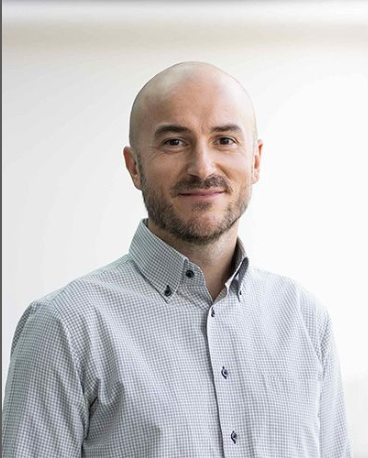
Francesco Saverio Tedesco
Clinical Professor, UCL
Principal Group Leader, Francis Crick Institute
Honorary Consultant, GOSH Dubowitz Centre
Role in DREAMS: Lead on advanced patient-derived muscle models
Photo: UCL
“In DREAMS, together with Sara Benedetti, we lead efforts to develop advanced patient-derived cellular models of rare neuromuscular diseases.”
At the centre of this effort are iPSC-derived muscle cells generated from patients. These models allow researchers to examine disease-relevant biology in a controlled environment — while maintaining a direct link to patient genetics.
But building these systems is far from routine.
“Challenges include ensuring reproducibility across diverse genetic backgrounds, scaling production for high-throughput screening, and validating disease-relevant phenotypes in vitro.”
In other words: before discovery comes reliability.
Why DREAMS looks across diseases, not only within them
One distinctive feature of DREAMS is its cross-condition approach. Instead of studying each rare neuromuscular disease in isolation, the consortium investigates shared biological pathways.
“Many rare neuromuscular disorders share common pathways, such as defects in nuclear envelope integrity or muscle regeneration.”
For Tedesco, this is not about merging diseases conceptually. It is about identifying convergence points, mechanisms that may help explain why different genetic disorders can lead to overlapping cellular dysfunction.
Studying diseases collectively allows the team to:
- Compare mechanisms systematically
- Reduce duplication of experimental work
- Explore therapeutic targets that may be relevant across conditions
This shared-mechanism perspective also strengthens the European collaborative model of DREAMS, where protocols and findings are designed to circulate rather than remain confined to individual labs.
When biology generates data, and AI helps interpret it
The interview repeatedly returns to one theme: complementarity.
DREAMS integrates advanced biological modelling with AI-supported analytics. The relationship between the two is not hierarchical, but functional.
“iPSC-derived muscle models provide physiologically relevant systems to test hypotheses and therapies, while AI accelerates data interpretation, pattern recognition, and biomarker identification.”
The models generate multi-layered datasets. AI tools help identify patterns that may not be immediately visible through conventional analysis.
Importantly, the ambition remains methodological. DREAMS is building research capacity, not claiming clinical readiness.
Foundations before translation
When asked about progress so far, Tedesco does not point to a headline result. He speaks instead about groundwork.
“The establishment of robust protocols for generating patient-specific muscle cells and integrating multi-omics datasets with AI tools lays the foundation for biomarker discovery and therapeutic screening.”
Foundations are often invisible to the outside world. But they determine whether later findings are robust, reproducible and comparable across institutions.
For a project operating across Europe, protocol alignment and data integration are not technical footnotes — they are strategic necessities.
Biomarkers, carefully approached
The conversation then turns to biomarkers.
“Reliable biomarkers enable earlier diagnosis, better disease monitoring, and personalized treatment strategies.”
In the context of DREAMS, biomarker discovery remains firmly within the research phase. Identifying candidate markers through integrated cellular and computational approaches is one step. Clinical validation is another.
The project’s contribution lies in enabling the first step to be more rigorous.
Motivation rooted in patients, sustained by collaboration
Behind the technical discussion lies a personal motivation.
“These conditions often lack treatments, and families face enormous challenges.”
Tedesco’s path into neuromuscular research began during his medical training, combining stem cell biology with a fascination for muscle tissue and its failure in disease.
That dual lens, scientific curiosity and clinical awareness, reflects the broader structure of DREAMS: laboratory innovation connected to clinical reality, but progressing through careful research stages.
A European research ecosystem
UCL’s role within DREAMS does not exist in isolation. It is embedded in a broader research network that includes:
- The Francis Crick Institute
- Links with the NIHR Great Ormond Street Hospital Biomedical Research Centre
- Horizon Europe project MAGIC, focused on muscle disease modelling for gene therapies
“These collaborations bring together world-class expertise in stem cell biology, clinical translation, and large-scale European research networks.”
For DREAMS, this ecosystem dimension matters. Rare disease research requires scale, interoperability and shared standards, elements that European collaborative frameworks are uniquely positioned to support.
Looking ahead
When asked what he hopes DREAMS will achieve in the coming years, Tedesco frames the answer in terms of sustainability rather than singular breakthroughs.
“Ultimately, the goal is to create a sustainable framework that accelerates innovation for rare neuromuscular diseases beyond the project’s lifetime.”
Validated models. Integrated datasets. Predictive biomarkers under investigation. Candidate strategies ready for further development.
