In a laboratory setting, two experiments can produce the same result on paper and mean something completely different.
This is especially true when studying processes like autophagy.
In neuromuscular research, autophagy is widely recognised as an important biological process. Identifying its role is only the starting point. Gaining meaningful insight into how it behaves requires precise and carefully designed measurements.
In the DREAMS project, this question sits at the core of the research approach.
A group of rare neuromuscular disorders has been selected because they share underlying biological features, including alterations in how muscle cells manage and recycle their internal components. Studying these shared processes creates an opportunity to look beyond individual diseases and explore common mechanisms.
At the same time, it introduces a challenge. If different diseases are being compared through the same biological pathway, that pathway needs to be measured in a consistent and reliable way.
A process that is easy to mention, but harder to measure
Autophagy is not a single event. It is a dynamic process that unfolds over time.
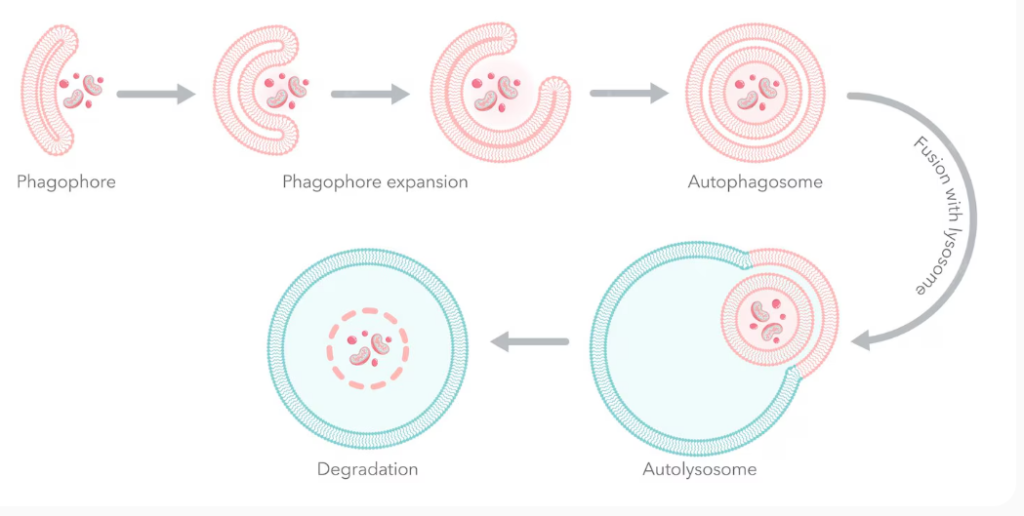 Simplified representation of the autophagy process, highlighting its different stages and the importance of measuring them accurately. Image: Freepik
Inside the cell, it involves the formation of structures that isolate cellular material, their interaction with other components, and their eventual degradation. Each of these steps can be affected in different ways.
This is where things become less straightforward.
A single observation does not always provide a clear interpretation. What looks like increased activity may also reflect a disruption at a later stage. Without the right level of detail, it is difficult to distinguish between these possibilities.
As one researcher involved in the field explains:
“When you look at autophagy, what you measure and how you measure it shapes what you think is happening.”
Why precision matters when comparing diseases
One of the aims of DREAMS is to identify patterns that are shared across different neuromuscular disorders.
To do that, researchers need to compare data generated from multiple models. That comparison only works if the measurements are consistent.
If the same type of signal is captured in different ways, or if only part of the process is measured, it becomes difficult to determine whether two observations are actually comparable.
This is why precision is not just a technical concern. It directly affects how results can be interpreted.
In practice, it allows researchers to move from general observations to structured data that can be analysed across diseases.
Studying autophagy in a controlled environment
To support this approach, DREAMS relies on reproducible cellular models.
Using induced pluripotent stem cells, researchers generate skeletal muscle cells that reflect disease-specific characteristics. These models make it possible to study different conditions under the same experimental framework.
Within this system, autophagy is not assessed through a single measurement. Instead, it is explored through a combination of complementary approaches, designed to capture different aspects of the process.
This helps ensure that the data generated is:
- Reproducible across experiments
- Sensitive to different stages of the process
- Comparable across disease models
The result is a more robust basis for analysis.
From biological processes to structured data
The data generated in DREAMS is used not only to describe biological mechanisms, but also to support further analysis.
This includes computational approaches, where patterns across datasets can be explored in more detail.
For these analyses to be meaningful, the quality of the underlying data is essential.
If measurements are imprecise, the data may be difficult to interpret or combine. This can limit its usefulness, particularly in projects where different types of analysis are brought together.
Careful measurement helps reduce this uncertainty. It allows observations to be organised in a consistent way and supports the identification of reliable patterns.
Looking at the bigger picture
Autophagy is connected to other cellular processes that are also relevant in neuromuscular disorders.
Changes in how cells handle internal components can influence protein organisation, structural stability and overall cell behaviour. Understanding these relationships requires looking beyond individual readouts.
By combining different types of measurements, DREAMS aims to build a more integrated view of how these processes interact.
This makes it possible to explore both what different diseases have in common and where they differ.
A detail that shapes the whole approach
DREAMS is a research project. Its objective is not to deliver clinical applications within its duration, but to develop methods and data that can support future work.
Within this context, precise measurement may seem like a small detail.
In reality, it plays a foundational role.
It supports how data is generated, how diseases are compared, and how results can be used in later stages of research. It also helps ensure that biological and computational approaches can be combined in a meaningful way.
And in complex research, those foundations matter.
