Every year on 28 February, Rare Disease Day reminds us that rare diseases are not rare when considered together. More than 300 million people worldwide live with a rare condition. For many of them, diagnosis can take years and therapeutic options remain limited.
Rare neuromuscular disorders are a clear example of this challenge. These conditions often involve progressive muscle weakness, complex molecular alterations and significant variability between patients. Research in this field must navigate small patient populations, fragmented data and long development timelines.
DREAMS, a Horizon Europe research project, contributes to this landscape by exploring a simple but ambitious question: can shared biological mechanisms across different rare muscular diseases help structure future therapeutic research?
Understanding common molecular mechanisms
Rather than approaching each condition in isolation, DREAMS focuses on identifying biological pathways that may be altered across several rare neuromuscular disorders.
Among the mechanisms under investigation are alterations in autophagy, a cellular process responsible for maintaining protein and organelle quality control, and structural disorganisation of cytoskeletal components such as desmin. Both processes are essential for muscle homeostasis, and their dysregulation has been observed in multiple neuromuscular diseases.
By studying these shared pathways, the project aims to generate a structured understanding of common and disease-specific molecular signatures. This comparative approach does not assume uniformity across conditions. Instead, it seeks to identify overlapping mechanisms that may inform future research directions.
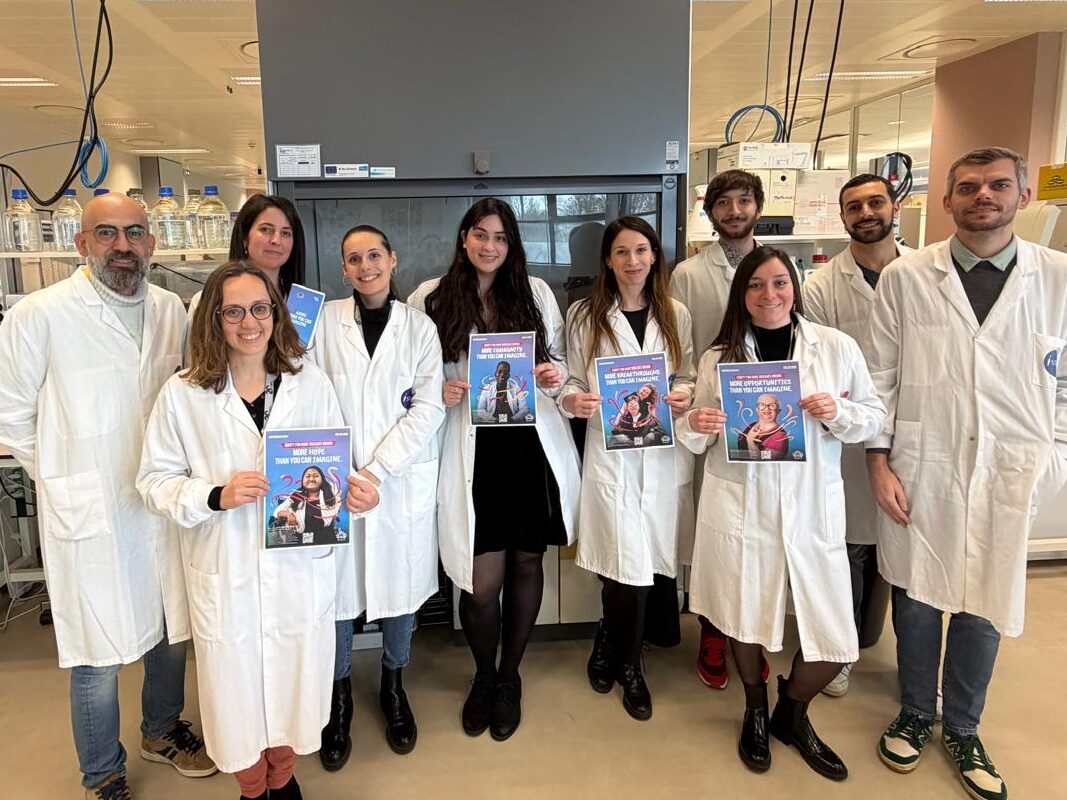 i-Stem team working at DREAMS
Building robust cellular models
A central element of DREAMS is the use of skeletal muscle cells derived from induced pluripotent stem cells. These patient-derived cellular models allow researchers to recreate disease-relevant features in a controlled environment.
Working with harmonised cellular systems enables the generation of comparable transcriptomic and proteomic datasets across different disorders. It also allows systematic testing of compound libraries under consistent experimental conditions.
This approach strengthens reproducibility and provides a coherent framework for cross-disease analysis.
Integrating artificial intelligence responsibly
The biological data generated in DREAMS are complex and multidimensional. To support interpretation, the project integrates artificial intelligence methods as analytical tools.
AI is used to help identify dysregulated pathways, prioritise potential druggable targets and explore compounds that may interact with these targets. It also supports the investigation of possible extended indications across related disorders.
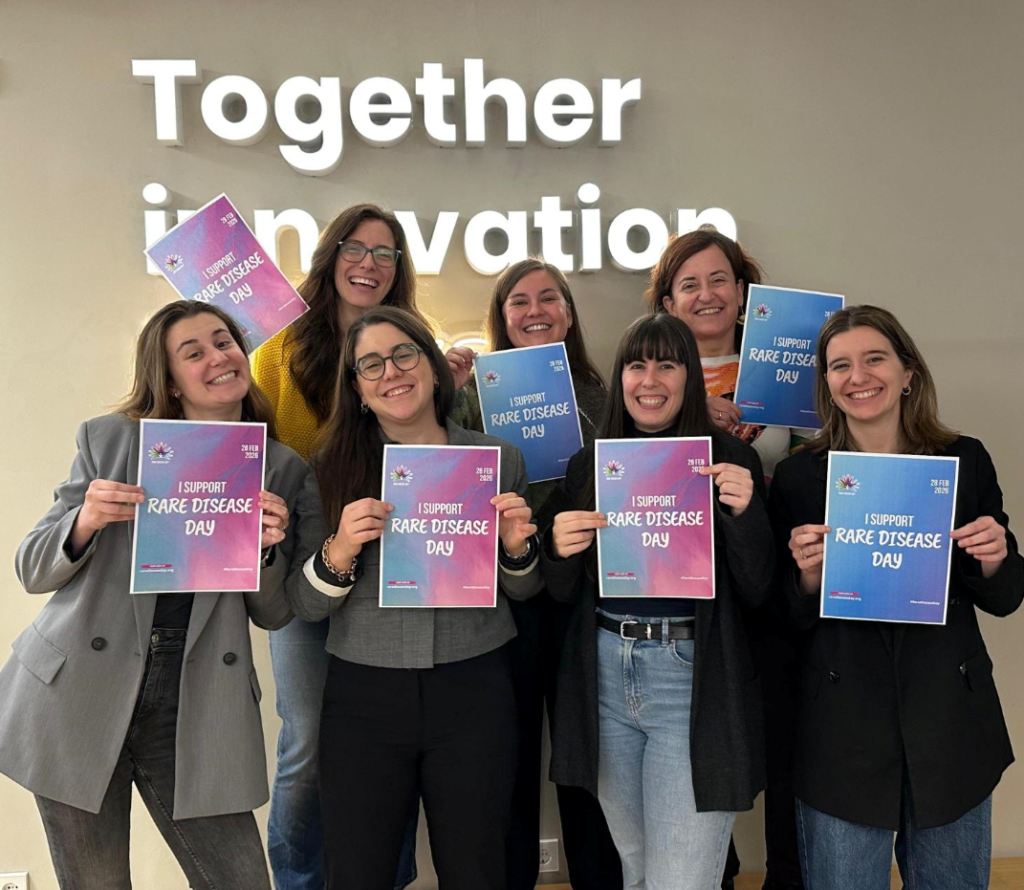 Zabala Innovation team working at DREAMS
It is important to emphasise that DREAMS remains a research-stage initiative. Computational predictions are not endpoints in themselves. They are integrated with experimental validation in cellular and preclinical models to ensure scientific robustness.
Exploring drug repurposing strategies
Drug repurposing is particularly relevant in rare disease research. Because safety profiles of approved compounds are already characterised, repurposing strategies may help structure exploratory research more efficiently.
Within DREAMS, phenotypic screening of compound libraries is combined with AI-supported analysis to identify molecules that warrant further investigation. In parallel, the project explores the potential design of new molecular entities where appropriate.
The objective is not to deliver a clinical therapy during the project lifetime. Rather, DREAMS aims to generate high-quality scientific evidence that may inform future translational efforts.
Rethinking clinical research models
Beyond laboratory research, DREAMS also contributes to discussions on how clinical research in rare neuromuscular diseases can be structured more effectively.
Traditional clinical trial designs can be difficult to implement in small and heterogeneous populations. By engaging clinicians, methodological experts and patient representatives, the project explores adaptive approaches that may better reflect the realities of rare disease research.
A collective commitment
Rare Disease Day is an opportunity to recognise not only the challenges faced by patients and families, but also the importance of sustained and collaborative research.
DREAMS brings together expertise in stem cell biology, neuromuscular research, artificial intelligence and clinical methodology across Europe. Its contribution lies in building structured knowledge, generating reproducible data and advancing research responsibly.
Progress in rare neuromuscular disorders requires patience, collaboration and scientific rigour. On Rare Disease Day 2026, DREAMS reaffirms its commitment to that long-term effort.
